Kuntal Sutaria-Mehta | 17 August 2026
Making career transitions feel more human
You can’t always change the decision, but you can change how people experience it.
Career transitions have a very human side, especially when they happen through organisational change. And that’s something close to our hearts, because while restructuring is often talked about in terms of process, timelines and business decisions, the human experience sits right at the heart of it.
When someone learns their role is impacted, it is rarely just a work moment. It is personal. It can feel unsettling, confusing, embarrassing, frustrating, or all of those things at once. And while we cannot always take away the uncertainty, we can absolutely think about how people are supported through it.
More than CVs and Interviews
When people hear “outplacement support”, they often think about CVs, cover letters, job boards and interview practice. And yes, all of those things matter. They are practical, useful and often exactly what someone needs when they are suddenly and unexpectedly back in the job market.
But I reckon the best career transition support does something a bit deeper too. It gives people space to pause, breathe, reflect, ask questions, rebuild confidence and start to make sense of what comes next. Because finding the next role is important but feeling ready to take that next step is just as important.
So, what does good transition support actually look like?
At Kin, we have developed curated career coaching modules for people affected by workplace change. They are designed to be practical, flexible and relevant to today’s employment market, but also kind, thoughtful and grounded in real human conversations.
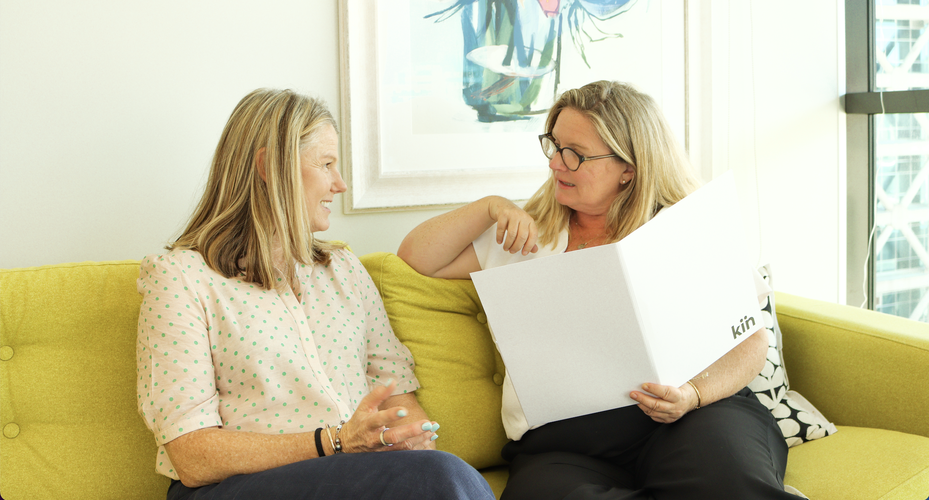
The sessions are delivered one-to-one or in small groups by experienced Talent Specialists, and the support is tailored to meet each person where they’re at. Some people arrive ready to update their CV straight away. Others need to first untangle what has happened, what they want, and what kind of work or environment will enable them to be at their best.
Starting with the person, not just the process
Career transition is not only about finding another job. At Kin, we begin with the person in front of us, not just the process around them. It is about helping them reconnect with who they are, what matters to them and what they need from work now. This can be a surprisingly powerful starting point, especially when change has happened quickly or unexpectedly.
From there, we move into the practical stuff. Creating a clear and relevant CV. Writing a cover letter that sounds like a real person wrote it. Understanding how to navigate job boards and recruitment processes. Using networks in a way that feels natural rather than awkward. Preparing for interviews with confidence, authenticity and a bit more intention.
What we hear from people in transition
The strongest feedback is not always just “I got a job”, although of course that is a brilliant outcome. What we often hear is that people feel calmer, clearer and more prepared. They feel less alone in the process. They have language for their strengths again. They know what to do next, and that can make a big difference.
And honestly, that matters. Because when someone is navigating change, they may not be showing up as their most confident self. A bit of structure, encouragement and practical hiring insight can help them move from feeling overwhelmed to feeling like there is a pathway forward.
Why this matters for employers
For employers, thoughtful outplacement support is so much more than a nice-to-have. It is an expression of care and responsible leadership during change. It helps protect dignity, maintain trust and show people that even when the decision is difficult, the way it is handled still matters.
A more human way forward
So, if you are planning a restructure, supporting people through change, or simply thinking about how your organisation can do this better, start with the human experience. Be clear. Be kind. Be practical. Give people the tools, space and encouragement they need to take their next step with confidence.
At Kin, our outplacement and career coaching support brings together structured modules, experienced Talent Specialists and genuinely human conversations, so people can move through career transition with clarity, dignity and momentum.